- River River Books' Newsletter
- Posts
- Five Questions with Author Beth Gilstrap
Five Questions with Author Beth Gilstrap
On liminal spaces, making connections, decay, and rebirth

We’re so happy to present our Five Questions author interview with Beth Gilstrap, whose forthcoming There Is News Along the Ohio River publishes February 23, 2026, as one of the first two titles in our Plainwater Nonfiction Series.
We hope you will consider preordering this book today, dear reader. Preorders directly support our authors and the design and printing of their books — they mean so much to a small press like ours.

How does the idea of place, something we love at River River Books, shape There Is News Along the Ohio River?
This book is essentially a document of my time living less than a mile away from the Ohio River in Louisville, Kentucky, from 2020-2022. Most of the imagery is something I witnessed walking the Big Four Pedestrian Bridge across the river into Indiana and back. Naturally, it inspired me to think of borderlands and liminal spaces both in an environmental sense and psychologically. I was newly separated and had moved 500 miles from the only home I’d ever really known. My whole life had turned in a way I had not expected. I carried a lot of grief with me. It was still heavy pandemic times and I was hesitant to socialize or meet people in a new to me place so I observed and interacted with the place in other ways. I am also a big gardener, cook, and yogi and try align myself with the seasons and be present in all things. Of course, that takes work and walking outdoors always helps.
What is a piece that you see as a particular driving force in your collection, and why?
I deal with the strange nature of time and how trauma fragments perception and how I was trying so hard to find any kind of joy in an extremely isolated period. XXV illustrates my yearning for peace, for joy, and finding it in serendipitous moments. Had I not walked the riverfront, I would not have discovered this small, independent circus setting up their tent for a few shows over a very cold, gray weekend in December. This was the first live show I attended since the beginning of the pandemic and the piece speaks to the overwhelming anxiety of being in an audience at this time, feeling a connection with outsiders, and the importance of culture and community for mental health.
What was a significant revision that occurred along the way?
Aside from fiddling with structure and arrangement, I didn’t really have a significant revision. I had a clear vision of what I wanted to accomplish with this project and imposed quite a few constraints on myself so it was just about finding the right arrangement so each piece would build on the previous. I settled on a seasonal arrangement as it felt most natural. Cycles are repeated. Rivers flow. Decay occurs and something new is reborn.
I followed these images into story, into my own devastation, and into noticing the small moments of beauty I clung to for dear life.
At what stage did your final title emerge — early, late? How did it help with your collection’s conception?
I had the title (and opening line) of each piece before I had anything else. I walked the bridge for a year and a half before I started putting my thoughts on paper, but there was a sign on the bridge that captured a newspaper headline from the late 1800s when there was a big disaster for the workers who built the bridge when a crane collapsed. Everyday I walked by that sign. Everyday I repeated that line in my head and tried my best to remember everything I saw happening around me. News that could be as small as a butterfly clipped by a bird, falling to the water or as sweet as a pair of tiny pink mittens tied to the railing, doing an incredible wind dance. I followed these images into story, into my own devastation, and into noticing the small moments of beauty I clung to for dear life. Over the many miles walked, I thought of Sherwood Anderson’s Winesburg, Ohio, The Spoon River Anthology by Edgar Lee Masters and wondered if I could capture this place that became so important to me with clarity and grace.
What’s something you wish every reader could know about you as the writer of this book?
I’ve struggled with mental health issues my whole life. C-PTSD affects your ability to regulate emotions, your perception, and how you relate to other humans. I’ve always been more drawn to nonhuman animals and do not consider my life more valuable than that of say a field mouse, frozen in the snow. My heart breaks as I witness and wrestle with powerlessness and the desire to protect even the smallest of creatures.
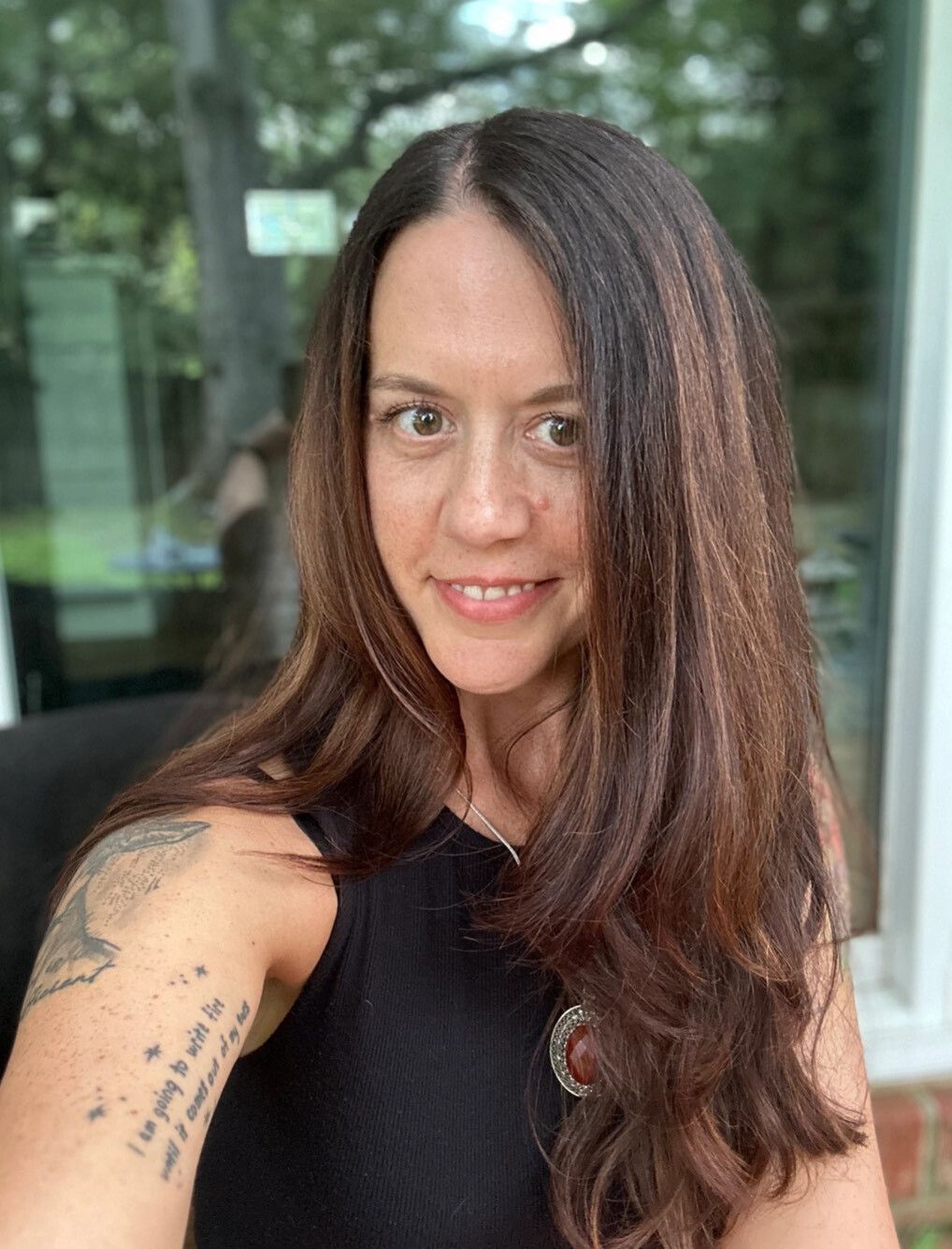
Beth Gilstrap
Beth Gilstrap (she/her) is a writer from Charlotte, North Carolina who likes to play with genre lines. She is the author of two story collections including Deadheading & Other Stories (2021), winner of the Red Hen Press Women’s Prose Prize, and I Am Barbarella: Stories (2015) from Twelve Winters Press. She is also the author of the chapbook No Man’s Wild Laura (2016) from Hyacinth Girl Press & EIC/publisher of the goth/punk zine, Black Lily. Her essays, stories, and hybrids have appeared in Poets & Writers, Wigleaf, Craft, Bending Genres, and The Cincinnati Review, among others. She and her house full of critters currently call the Charleston-metro area home. As a neurodivergent human who lives with c-PTSD, she is quite vocal about ending the stigma surrounding mental illness