- River River Books' Newsletter
- Posts
- Five Questions with author Jennifer A Sutherland
Five Questions with author Jennifer A Sutherland
On love and its limitations, landscapes, and making poems true
It’s a joy to present here our Five Questions author interview with poet Jennifer A Sutherland, whose forthcoming House of Myth and Necessity (February 23, 2026) is her second book with River River. Her first, Bullet Points, was one of the first two collections we published, back in 2023.
Today, dear reader, would be a fantastic day to preorder House of Myth and Necessity. Preorders are vital for small presses, their authors, and their books. We are so grateful for your support.
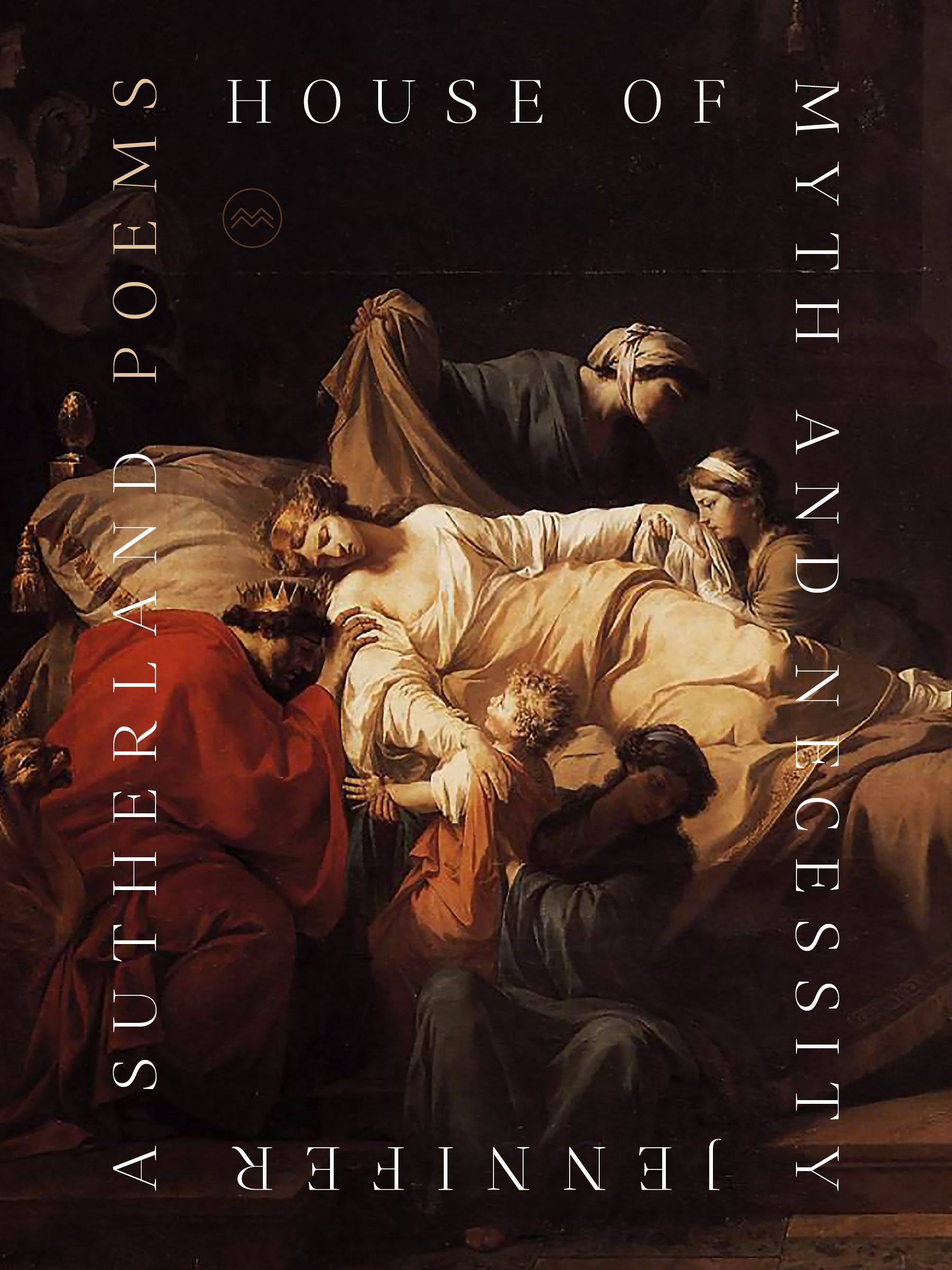
How does the idea of place, something we love at River River Books, shape House of Myth and Necessity?
I think this book is about houses and the myths that we make in them and from them. Baltimore is one of the houses that's made me, absolutely, and there are some love poems to Charm City in this collection. I mean, they're my kind of love poems, in that they are also engaged with the inherent limitations of loving, but in a loving way. I grew up in a working class neighborhood here. My neighbors worked at Sparrows Point, or they climbed utility poles, or drove trucks. Our mothers wore housecoats. We took buses when we needed to get somewhere. My little brother and I played in the alley behind the house. I will say that alleys are very important to me and the way I think. A person who grows up in neighborhoods criss-crossed by alleys learns that there is a formal way of getting places and an informal way, a roundabout, secret way scarred by potholes and guarded by dogs. There aren't any signs. I like the alley way of going places. My internal landscape is concrete and red brick and formstone and the kinds of plants that thrive there. Honeysuckle, chickweed. There used to be a wild blackberry bush behind a bank off The Alameda. I would like to write a poem about those blackberries, how they grew there for free and people ate them right off the branches.
I was writing about grief and sex and the kind of fate that turns up in Greek tragedy and film noir, about the ways people hurt one another whether they mean to or not. Once that poem was true, the rest of the book came together.
What is a poem that you see as a particular driving force in your collection, and why?
I started writing the poems in this book in 2018 or so, while I was working towards my MFA at Hollins University in Roanoke. I was starting to approach the themes that are there now, but they weren't coming into focus yet. Then the pandemic began and I moved back to Baltimore. I was surrounded by concrete again. I wrote Bullet Points during the first pandemic winter. That book happened pretty fast. But this one, I kept circling around. It didn't have a center yet. I had started a poem while I was at Hollins that I knew should end with a line from Lynda Hull's poem, “Black Mare.” The poem went through a bunch of weird drafts, it was broadly political at first, then it was about capitalism and labor, and none of the drafts worked at all. Finally I realized it wasn't working because I wasn't writing myself into it, which sounds very solipsistic and maybe is, but there wasn't any life in it without my own experience. I was writing about grief and sex and the kind of fate that turns up in Greek tragedy and film noir, about the ways people hurt one another whether they mean to or not. Once that poem was true, the rest of the book came together. But I had to sit with some pain to get there.
What was a significant revision that occurred along the way?
The title has been, at different times, Solve 4 Virtue; Alcestis as; and now House of Myth and Necessity.
At what stage did your final title emerge—early, late? How did it help with your collection’s conception?
We settled on this title late, after River River had already accepted the manuscript. I love this title and think it's perfect. The idea was already there in the poems. I have had advice from a number of wonderful teachers and advisors along the way, including Han VanderHart at River River and Lynn Melnick. Thorpe Moeckel and Cathy Hankla at Hollins were incredibly patient and gentle with early versions of this book, even with a couple of very conceptual pieces that I shudder to think of now. I was trying to make very conceptual statements about experiences that were, actually, deeply personal and very painful. There's a line in Bullet Points: "Distraction is an art, like everything else; I do it so it feels real." And, um, yeah.
What’s something you wish every reader could know about you as the writer of House of Myth and Necessity?
That I am often very frightened and very brave at the same time and about the same things. That I felt that way writing these poems. That I am a terrible liar but a good hider. That every hider wants, secretly and terribly, to be found.

Jennifer A Sutherland
Jennifer A Sutherland is a poet, essayist, attorney and educator in Baltimore, MD. Her work has appeared in Birmingham Poetry Review, Hopkins Review, Best New Poets, the Denver Quarterly, Cagibi, EPOCH, and elsewhere.