- River River Books' Newsletter
- Posts
- Five Questions with author Preeti Vangani
Five Questions with author Preeti Vangani
On the relationship between place and permission, on elegy as communal act, on the expansiveness of landscape
Dearest River River readers, we are so happy to be sharing our Five Questions author interview with Preeti Vangani, whose forthcoming Fifty Mothers publishes February 23, 2026.
And, yes, today would be a fantastic day to treat yourself to a preorder of this remarkable collection. Preorders are so important for a small press like ours — they’re vital to our support of our authors and our books.

How does the idea of place, something we love at River River Books, shape your collection?
Place, just the word for me, is loaded with the idea of permission. I grew up in a strict nuclear family, and for all of my life with my mother still alive, there were limits to where she and I could go by ourselves and until what time. Oh, how my father railed at us when we returned late. So the idea of place in writing these elegies, is stained with the weight of how far could my mother and I journey to, how far could I be when I was living on my “father's clock” as the poem, Gridlock says, with the speaker jammed in horrendous Bombay traffic. Place was desire and escape, a freedom to explore the world outside the house. Devour the pleasures of a neighborhood gaming parlour, a movie hall beyond the “allowed” areas, sleep in boyfriends' ill-kept rental rooms. Yet, in transcribing grief, I found myself resurrecting the very place I wanted to leave, my only home in Bombay, a 550-square-foot flat: the kitchen and the dining table, the bathroom and balcony: living sites of my “housewife” mother's labour, and her unfulfilled desire to renovate. Moving to San Francisco from a noise-polluted, cramped and parent-supervised Bombay, you can imagine how I felt landing in the middle of Golden Gate Park. I hadn't ever had such a continuous encounter with nature, its green enormity. And the expansiveness of landscape and curiosity with vegetation and wildlife started appearing in poems as I travelled across the States. “Sheridan, Wyoming” and “Resident Alien” are poems that commenced my rendering of that vastness.
What is a poem that you see as a particular driving force in Fifty Mothers, and why?
The poem “Placebo,” after I wrote it, felt like a large shift in how I was approaching writing about my parents. In the poem, the parents are returning home after having found that the mother's illness is irreversible and fall prey to a con man selling a foolproof cancer remedy made of “real gold.” That poem, where the speaker is absent, allowed me to observe my mother and father as people, not parents. It took the pressure off of my own grief away and let me witness their individual and conjoined vulnerabilities. Stepping away from the notion that I was the only bearer of this enormous grief released me from the weight and bias of the “I” perspective. And all the other mothers' voices, including writing poems in the “gone mother's” voice turned the elegiac act into a communal and participatory gesture. It lightened my heart.
The manuscript suddenly had a silver thread that held it all together. The fragmented version helped propel the themes and tensions between the book's key speakers. It also never stops amazing me how many poems are hiding in plain sight inside a larger poem.
What was a significant revision that occurred along the way?
The poem “Fifty Mothers” that appears as fragmented vignettes throughout the book began and was originally published in AGNI as a lyric essay. I performed it from memory at several readings and events. When the brilliant Diana Arterian read the manuscript, she suggested splitting up the essay and having its narrative power pulled through the book, and it just clicked! The manuscript suddenly had a silver thread that held it all together. The fragmented version helped propel the themes and tensions between the book's key speakers. It also never stops amazing me how many poems are hiding in plain sight inside a larger poem.
At what stage did your final title emerge—early, late? How did it help with your collection’s conception?
Very late! I had been sending the manuscript out for over two years with two different titles. Both leaned towards abstraction and felt not fully representative of the whole book. “Fifty Mothers” was perhaps among the last couple of poems to make its way into the book. Around then, I aired my frustration about my relatively weaker titles with my teacher and friend, D. A. Powell, and mentioned the oddity of having a lyric essay, “Fifty Mothers” stand in the middle of the poems. “Fifty Mothers,” he said, that's a great book name, and so it was. It clarified and reinforced the multiplicity of loves and griefs in the book. And I think it has become a great aesthetic force in giving us a cover that visualizes the repetition and cyclical nature of love and loss, life and death.
What’s something you wish every reader could know about you as the writer of Fifty Mothers?
I came into writing relatively late in life, and almost by accident. I want to say, it is very possible, however late. My cousin sister wrote this line on my MFA graduation card in calligraphy (which she learnt at forty): “I was a late bloomer. But anyone who blooms at all, ever, is very lucky,” --Sharon Olds
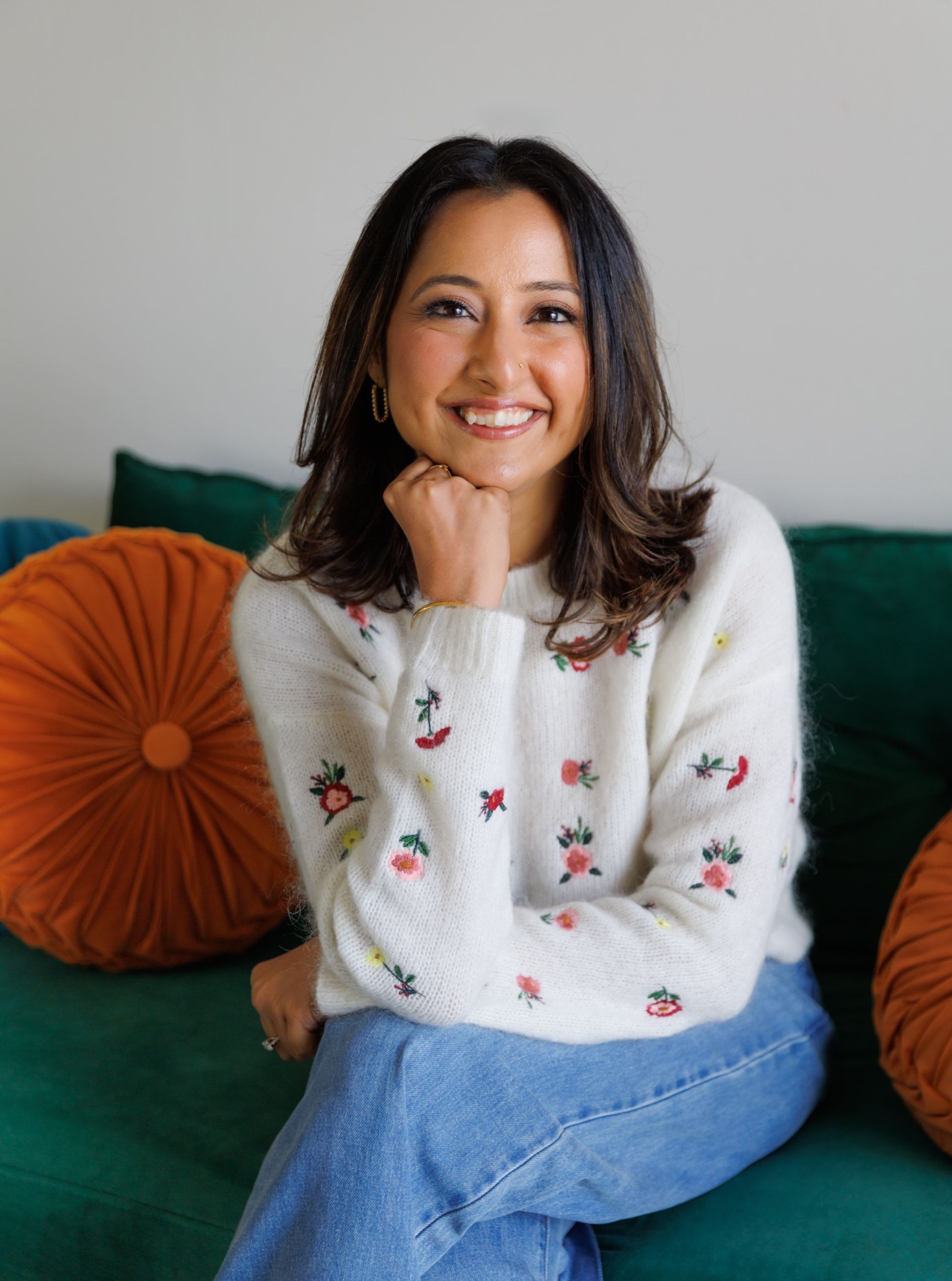
Preeti Vangani
Preeti Vangani is an Indian poet and writer based in San Francisco. She is the author of Mother Tongue Apologize (2019), winner of the RLFPA Poetry Prize. Her work has been published in AGNI, The Georgia Review, Gulf Coast, and Prairie Schooner. Her debut short story won the 2021 PEN/Robert J. Dau Emerging Writers Prize. Vangani has been a resident at Ucross, Djerassi and Ragdale. She has received artist grants from San Francisco Arts Commission and YBCA through which she facilitates poetry workshops rooted in writing grief through joy. She holds an MFA in Writing from University of San Francisco.